Linux Environment Variables: export, PATH, profile.d and systemd
Set Linux environment variables: export, echo, /etc/profile.d, ~/.bashrc, systemd Environment= and EnvironmentFile=, PATH, and debug with printenv.
Read tutorial →Browse step-by-step tutorials in this topic.
Set Linux environment variables: export, echo, /etc/profile.d, ~/.bashrc, systemd Environment= and EnvironmentFile=, PATH, and debug with printenv.
Read tutorial →
Fix systemd service failed to start: systemctl status, journalctl -u, ExecStart path and permissions, User=, dependencies, daemon-reload, and…
Read tutorial →
Create systemd timer units on Linux: OnCalendar schedules, linked oneshot services, list-timers, enable on boot, and migrate from…
Read tutorial →
Stop runaway Linux processes safely: find the PID, send SIGTERM vs SIGKILL, use pkill and killall, understand zombies,…
Read tutorial →
Forward systemd journal logs to a central collector with systemd-journal-upload and systemd-journal-remote, secure with HTTPS, and search with…
Read tutorial →
Set up restic for encrypted, deduplicated Linux backups: init, first backup, excludes, retention, systemd timer and restore drills.
Read tutorial →
Automate ViciDial's MySQL backups with a mysqldump script, a systemd timer, and a guarded restore script that won't…
Read tutorial →
Write a custom systemd service unit from scratch: unit file anatomy, restart policies, environment variables, logging, and dependency…
Read tutorial →
Compare systemd timers and cron for scheduling Linux tasks: syntax, dependency handling, missed-run behavior, and a clear decision…
Read tutorial →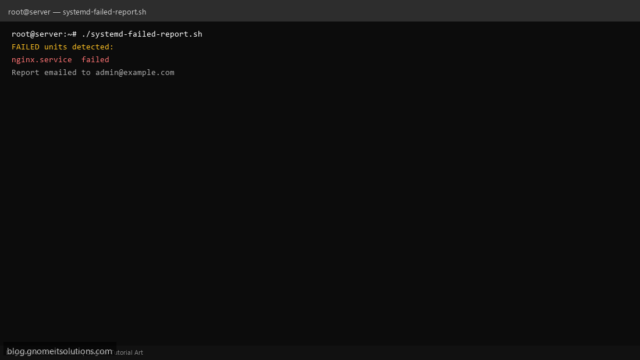
List failed systemd units on Linux with a Bash script. Daily report of failed services, timers, and mounts…
Read tutorial →