Choosing a server OS for the next three to five years matters more than chasing the latest release name. AlmaLinux and Rocky Linux are
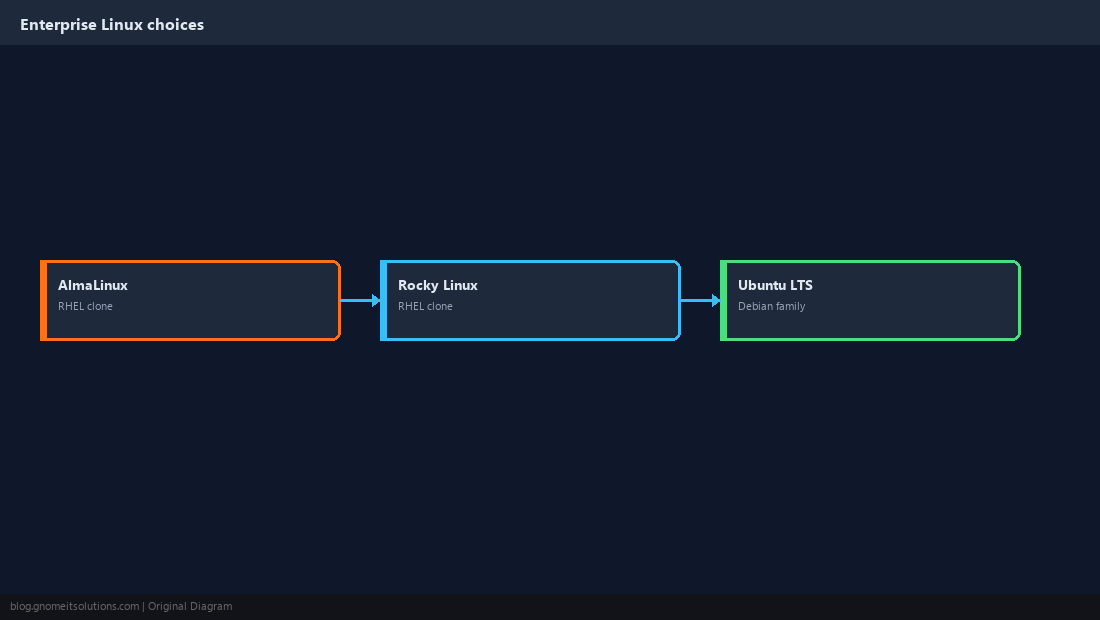
RHEL-compatible clones (rpm, SELinux, dnf). Ubuntu Server LTS is Debian-family (apt, AppArmor, huge tutorial ecosystem).
We run production guides on all three — for example
cPanel on AlmaLinux 9,
ViciDial on AlmaLinux 9, and
Docker on AlmaLinux/Ubuntu.
Three Different Lineages
AlmaLinux and Rocky both target binary compatibility with Red Hat Enterprise Linux. Ubuntu tracks its own release cadence with LTS every two years.
Support and Upgrade Planning
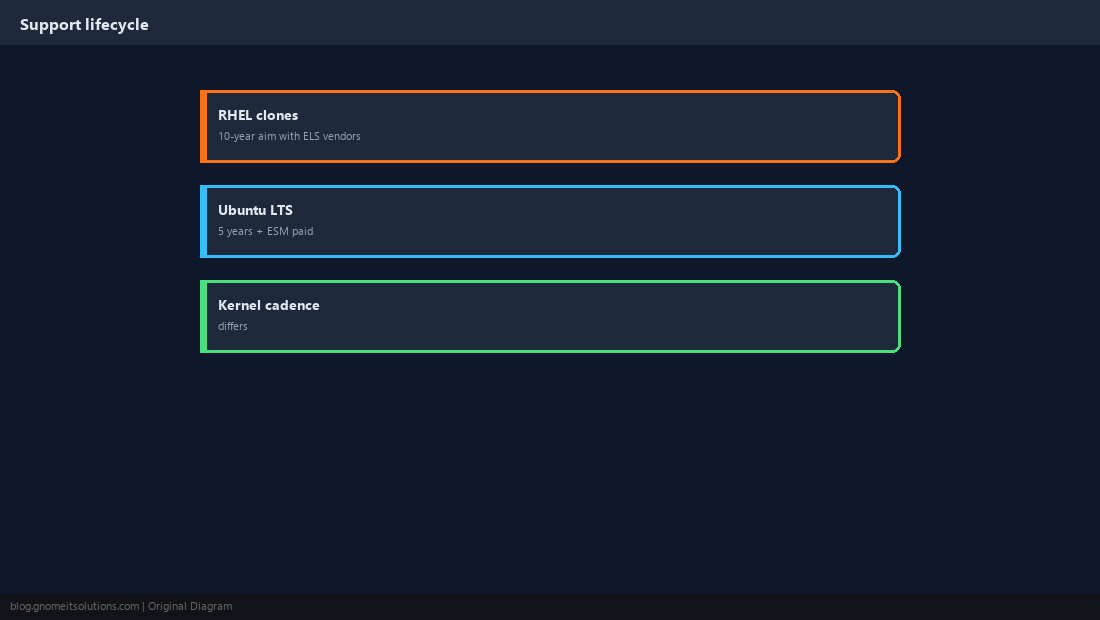
RHEL clones advertise long support horizons (often with vendor ELS options). Ubuntu LTS includes five years of standard support plus paid extended security maintenance.
Packages and Tooling
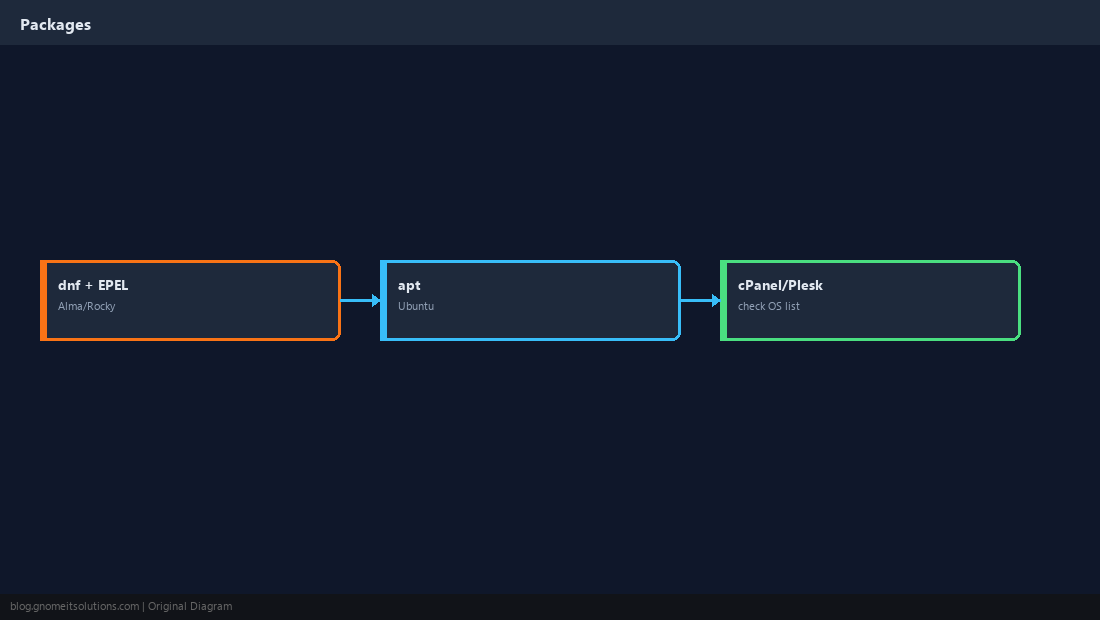
Alma/Rocky use dnf, EPEL, and often Remi for PHP stacks. Ubuntu uses apt with PPAs when needed — know your compliance rules before adding PPAs.
Cloud and Vendor Images
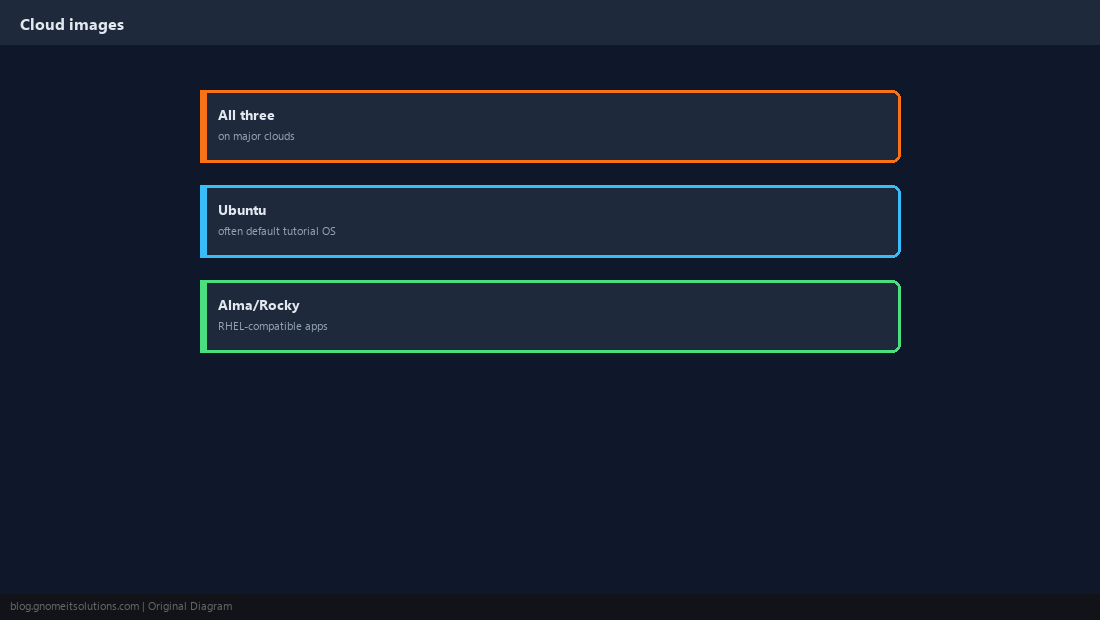
All three are first-class on major clouds. Ubuntu is the default in many beginner tutorials; Alma/Rocky win when a vendor ships RPM-only packages.
Security Frameworks
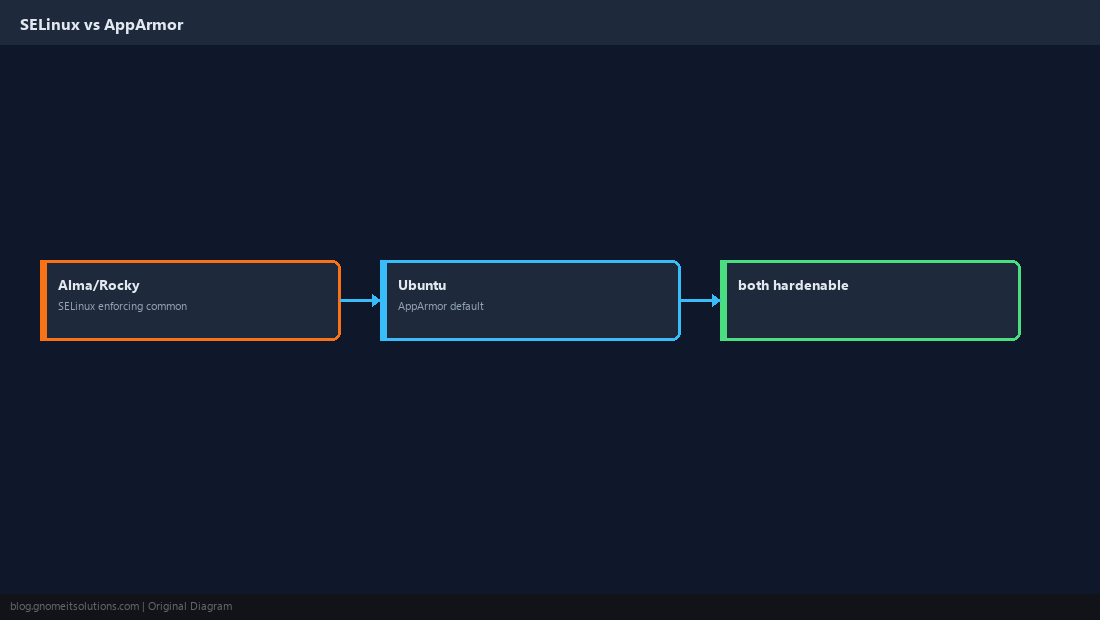
Expect SELinux enforcing on RHEL clones. Ubuntu defaults to AppArmor profiles on many services. Both can be hardened; the admin skill set differs.
Workload Fit
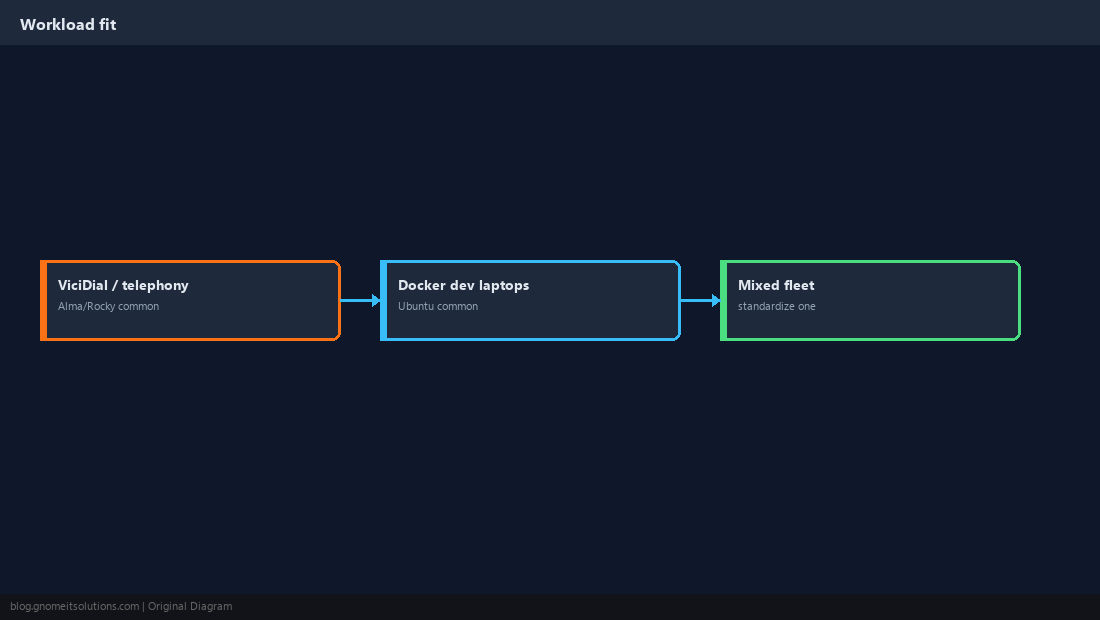
Telephony and enterprise RPM ecosystems often standardize on Alma or Rocky. Developer sandboxes and CI runners frequently use Ubuntu for speed of onboarding.
Practical Decision
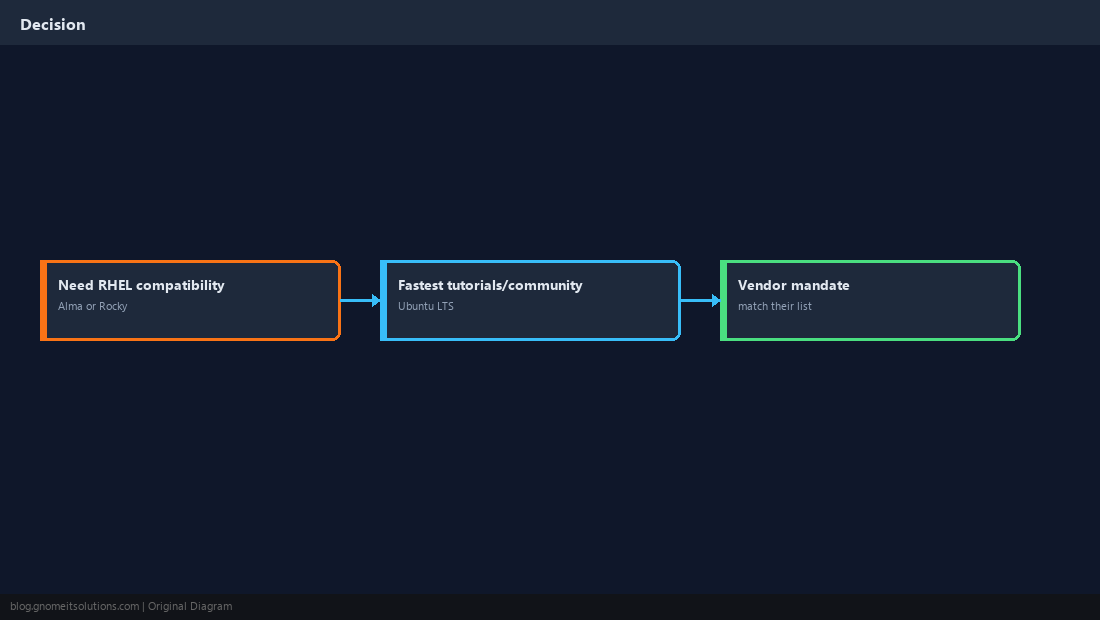
If software documentation says “RHEL 8/9 or compatible,” pick Alma or Rocky (either is fine — standardize your fleet). If your team lives in Ubuntu tutorials, Ubuntu LTS is rational.
Quick Reference
| AlmaLinux | Rocky Linux | Ubuntu Server LTS | |
|---|---|---|---|
| Family | RHEL clone | RHEL clone | Debian-based |
| Package tool | dnf | dnf | apt |
| MAC | SELinux common | SELinux common | AppArmor common |
| Best when | RHEL compatibility required | Same + Rocky community story | Fastest docs/community for beginners |
Related tutorials
Diagrams are original illustrations by Gnome IT Solutions. Tutorial text © Gnome IT Solutions.